February 10, 2026
 min
min


An invoice waiting to be sent, a client taking their time with payment…it doesn’t take much to compromise your business cash flow. For SMEs and larger companies, delayed invoice payments are sadly the rule and not the exception. Chasing payments is all part of the game, but to be effective you have to know when to send what without damaging your customer relations.
In this article: discover the steps for a structured invoice reminder pathway, best practices to avoid ongoing unpaid bills and how automation can save you both time and money. Whether you’re a CFO, accountant or manager, you’ll find useful advice and key levers to help you handle your accounts receivable professionally.
Why chasing unpaid invoices is key
Unpaid bills are unfortunately part of commercial activity, especially in the B2B sector. All companies, no matter their industry or size, have to deal with unpaid invoices at some point. Payment delays have consequences, they put a strain on your cash flow, cause planning issues and can limit business growth. So an effective payment chasing system is essential to secure the financial health of your business and anticipate payment delays.
What are the risks of unpaid invoices?
Here are some of the financial or legal consequences of unpaid invoices for businesses/
- Long, costly debt recovery processes: though things may start out amicably, they can quickly develop into complex disputes.
- A direct impact on cash flow: businesses can see their working capital diminish and may have to take out credit or use an overdraft.
- Strategic projects are paused or cancelled: investment, recruitment or growth can be postponed or completely abandoned.
- An accounting imbalance: unpaid invoices affect results and forward planning.
90% of UK companies experienced late payments in the past year; 44% say delays are more frequent than before. (Coface 2025 UK Payment Survey)
So a proactive payment chasing process is essential to limit the risks.
What’s the best way to chase payments so invoices are paid?
If a client is taking a while to pay, you need to take quick, professional action to preserve the relationship. Effective payment chasing is part of a gradual, rigorous, well documented process. Here’s how to structure your debt recovery process.
What are the key steps for chasing unpaid invoices effectively and getting paid?
Setting up a clear payment chasing process means you can predict late payments and save admin time while preserving client relationships.
A step-by-step guide to chasing unpaid invoices
- An initial payment chasing email. As soon as the payment deadline has passed and the invoice remains unpaid, send a polite message. Include all the details of the invoice, the total amount, payment deadline, payment term etc. Use a professional, constructive tone in your email; the idea is to gently remind them what they owe without causing friction.
- A second, more firm payment chasing email. If there’s no reply to your first message, send another 7 to 10 days later. Make this email more direct and include the potential penalties for non-payment (interest, suspension of services etc.).
- A telephone call. If the silence continues, phone them. A conversation can often move things forward, you may find out the reasons for the delay, or discover a potential sticking point (dispute, email error, absence etc.).
- A third payment chasing email with a tailored payment solution. Offer a tailored payment solution to try and come to an amicable agreement: payment in stages, partial write off, more time to pay with specific terms. Being flexible can speed up payment and preserve the relationship.
- A registered letter. If your client is burying their head in the sand, we recommend sending a ‘signed for’ letter. This letter should be professionally written and recall the terms of payment and penalties for non-payment.
- A Letter Before Action. A Letter Before Action is a formal request for the payment of your invoice within a specific time frame, it warns of the imminent issue of a court claim and is an essential requirement of the debt recovery process.
- As a final recourse, move forward with debt recovery. When all amicable solutions have been exhausted, legal proceedings should be started. You can make a legal claim through the county court, send a statutory demand or use a debt collection agency or solicitor. .
How to write a payment chasing email or letter
When chasing payment, you should be polite but firm, include the key invoice details (total, payment deadline, number), without appearing rude. Adapting the tone for each specific client profile and where they are in the payment process is essential.
Effective payment chasing emails or letters should include:
- your company address and the debtor’s,
- a clear reminder of the amount due (subject, total, date),
- an explicit request for payment,
- a precise time frame for reply or payment,
- a concluding paragraph to open the conversation.
What’s an ideal time frame between emails to chase unpaid invoices?
When it comes to chasing unpaid invoices, timing is a decisive factor. Careful scheduling helps you act at the optimal moment, without damaging client relationships.
Generally, the first step in your process should be a warning email that the payment deadline is near, five to eight days before it occurs. If the payment doesn’t arrive on time, then send a first payment chasing email one week after the deadline and a second reminder a week or so later.
If there is no response to these reminders, it’s time to make a phone call, and then send a ‘signed for’ letter to finish the cycle. This graduated approach is robust and aims to maintain your client relationships.
It’s a good idea to adapt the frequency and intensity of your reminders according to your client’s payer profile: you’re not going to handle a large account or export client exactly the same way as a local SME. In every situation, it’s important to take regular, traceable steps.
Good to know: What’s the time limit to legally recover an unpaid bill in the UK?
In England, Northern Ireland and Wales, the six-year rule applies. This means you have six years from the payment deadline to recover the money you are owed. However, if the debtor admits in writing that they owe the money, or they make a partial payment, the clock starts over. Once the 6 years have passed the debt becomes statute barred and is no longer admissible in court.
Scotland uses a different rule called prescription, which gives you five years to recover your payment. For any legal proceedings, it’s essential to keep a record of all communication between you and the client.
When to send a formal notice?
When amicable payment chasing has failed, it’s time to send a Letter Before Action. This is a legal requirement before taking any legal action. It formally requests payment within a specific time frame and warns of the imminent issue of a court claim if the invoice remains unpaid. The letter should be ‘signed for’.
As for when to send an LBA, it depends on the relationship with your client, but usually 14-30 days after your final attempt to chase payment. The LBA must be dated, contain all the key details of your invoice and remain factual and professional.
3 reasons your payment chasing process isn’t working
No clear overview
A clear overview of your accounts receivable is key to sending effective invoice reminders. You need to know who owes you what (the invoice total) and when it should be paid (the payment deadline).
Lacking this visibility can be the reason invoices remain unpaid and recovery processes are long and complex, as can lacking the time to effectively chase payments.
No cross-team collaboration
When different services within a company lack an effective means of communication, this can cause harmful payment delays. Every team has their own way of handing unpaid invoices: a sales team reminder won’t be the same as one from the accounts department and there’s also a risk of doubling up. To make cross-team collaboration easy, businesses need a tool with a clear, intuitive dashboard.
Manual payment chasing
Manual reminders aren’t a quick, effective debt recovery process tailored to each client scenario. A manual system is more prone to errors and oversights. Automating your invoice payment reminders can help.
Chasing unpaid invoices: automate your accounts receivable for better performance
It’s obvious that manually chasing unpaid invoices is no longer sustainable for today’s businesses. A time-consuming, error-prone and non-collaborative process, it lacks the agility, reliability, speed and effectiveness required for proper credit management.
An automated late payment chasing solution is essential. The goal? To minimise losses due to unpaid invoices and optimise cash flow. With this in mind, an effective accounts receivable tool works on several levels:
All client data in a single central place
Accountancy, finance, salesforce… Every service has its role when it comes to unpaid invoices. They all need access to similar information, even if their approaches are different.
A digital tool provides a shared overview of client data: billing cycles, payments received, late payments and actions taken. Improved, more effective collaboration means costs due to errors decrease and productivity increases…automatically!
Real-time tracking of every client
An accounts receivable tool continuously analyses client activity data. Dashboards then show detailed, up-to-date reports in real time so every client’s credit can be checked at any moment. This information is gold for decision making and taking the right action.
A personalised approach
A personalised message sent just before an invoice deadline can encourage clients to pay on time. If a payment is missed, an automated reminder email may well be welcome. It all comes down to improving client experience and brand image.
The best working conditions for your staff
Repetitive tasks can be boring, leading to a lack of motivation. Checking the details of invoices, ensuring they have been received and chasing payments aren’t hugely gratifying tasks.
Automating this process takes the pressure off of your team, and makes for more professional systems. Your staff will save a considerable amount of time, which they can then spend on core business work. A good argument for retaining finance talent within your company!
Faster payment processes
It goes without saying that getting paid quickly gives businesses more peace of mind. Reducing DSO optimises your cash flow. And a secure cash flow is synonymous with timely expense payments and lower costs.
Once that’s secured you can focus on maximising profits and financing new investments. A true competitive advantage!
Clearnox: the automated solution for getting paid faster
A solution designed for all your teams, from management to operations
For managing, chasing, and collecting invoices, Clearnox provides a cloud accounts receivable solution that supports all of a company’s performance needs.
Designed for CEOs and CFOs as well as operational teams (sales or finance), Clearnox is a true ally when it comes to optimising your accounts receivable.
With the benefits of automation, you can protect the company from unpaid invoices and avoid annoying cash flow issues.
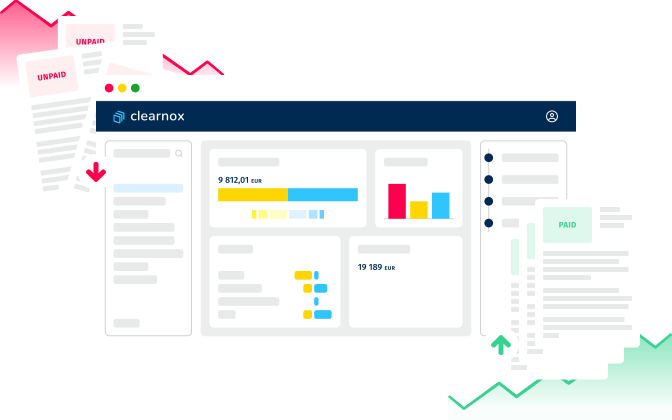
Detailed, practical intuitive dashboards.
Track KPIs like DSO and recovery rates at any time. Access key data like payment status, delayed invoices, outstanding amounts and even the type of risk a particular client represents.
Advanced functions to automate and customise your invoice reminders
Automated deadline and payment chasing emails, plus custom reminder scenarios according to client profiles. Varied, advanced, easy-to-use and ready-to-deploy functions
Designed for SaaS and synchronised with your own accountancy tool. Clearnox’s payment chasing tool can be activated online and is quick to set up and use. Among other benefits, it allows for bulk data processing regardless of company size or sector. A single click is all it takes to chase several invoices at once!
Collaboration, productivity, cash flow: all clear benefits of Clearnox
The Clearnox solution is a catalyst for efficiency, promoting collaborative working for both invoice management and disputes. It contributes to improved working conditions, client relations and brand image.
Professional, automated accounts receivable is a key for managing payment deadlines. In terms of productivity, the results speak for themselves: using Clearnox daily increases cash flow by an average of 30% and cuts the time spent tracking and sending reminders for unpaid invoices by 50%.
Managing your payment time frames isn’t just about well placed reminders, but a structured, collaborative process using the right tools. Invoice reminders shouldn’t be a constraint, but rather a strategic lever that serves both your cash flow and your employees.
Need help with your payment reminders? Demo the solution and see how Clearnox makes your processes smoother and more effective.
-
 Share
Share
 Previous post